Archive for the ‘Uncategorized’ Category

Traditions in India: Meaningful Bonding or Low-Cost Symbolism?

October 1, 2025

In India, traditions are everywhere – in the lighting of a diya at dusk, in the tying of a rakhi, in the gathering of families for festivals. They weave through daily life, often so quietly that we forget how much they shape us. Yet the question lingers: do these traditions still carry the weight of meaningful bonding, or have they thinned into little more than low-cost symbols?

Our philosophical inheritance offers both reverence and caution. The Rig Veda saw ritual as a way of maintaining ṛta, the cosmic order. Tradition was not ornament but alignment – a bridge between human life and universal rhythm. The Upanishads, however, warned against mistaking ritual for its essence. They reminded seekers that it is not the act itself, but the awareness behind it, that opens the way to truth.

This tension between form and meaning recurs throughout Indian thought. Śankaracharya accepted ritual as a necessary preparation but insisted that liberation lay in self-knowledge. Kabir mocked the emptiness of mechanical practice, preferring the grinding stone that feeds the world to a stone idol worshipped without understanding. Tagore saw festivals as “a rhythmic reawakening of the human spirit,” a phrase that captures how traditions, when lived consciously, renew rather than repeat. And Gandhi, in his own way, echoed this when he spoke of tradition not as blind inheritance but as the living pursuit of truth.

If the thinkers remind us of the depth that traditions can hold, daily life reminds us of their fragility. In modern India, a WhatsApp message often replaces a personal visit; a selfie in ethnic attire may count as “celebrating” a festival; a hurried puja fits into a busy workday. The forms survive, but the bonds may not. This is what the Bhagavad Gita cautions against when it speaks of action done without awareness: the act continues, but its spirit is lost.

For Indians abroad, however, traditions often function differently. Within the diaspora, they are less about continuity of practice and more about the preservation of identity. In multicultural societies, traditions become markers of difference – visible signals of belonging to an imagined homeland. The Diwali mela in London or the Ganesh festival in New Jersey is not only a religious event but also an act of cultural assertion: a way of saying “we are here, and this is who we are.”

This dynamic also explains why NRIs sometimes cling more fiercely to traditions than families in India itself. For them, traditions serve as anchors in unfamiliar cultural landscapes, reinforcing ties to language, memory, and heritage. But this investment often collides with the generational gap. The first-generation immigrant may view rituals as vital acts of cultural survival, while the second generation, shaped by the social norms of their host country, may see them as optional or even burdensome. What the parent considers heritage, the child may interpret as nostalgia.

Scholars of diaspora studies describe this as the “selective preservation” of culture – where certain rituals and festivals are amplified because they provide visible, easily shared markers of identity, while more nuanced aspects of tradition fade away. Thus, festivals become more public, grander than they might be in India, while everyday practices may quietly erode. This creates a paradox: traditions gain visibility but lose intimacy.

And yet, even in these reconfigured forms, traditions continue to matter. They provide diaspora communities with cohesion, a sense of belonging in a foreign land. For children of immigrants, even if the rituals feel distant, they still serve as cultural reference points -threads that can be picked up later in life.

The most striking comparison lies in how traditions adapt differently in India and abroad. In India, where traditions surround us in abundance, familiarity often breeds casualness – they risk becoming hurried, low-cost gestures. In the diaspora, where traditions are scarce, they are amplified for visibility, sometimes at the cost of depth. Abundance makes them ordinary; scarcity makes them ornamental.

Traditions are only as meaningful as the consciousness we bring to them. Without that, they are what the Upanishads warned against centuries ago – wheels that turn, but carry no cart.

——-

The joys of being a fly on the wall

September 25, 2025

There are two kinds of people in this world: those who want the spotlight, and those who are happy standing just close enough to steal some of its glow. The first are the “luminaries,” convinced the universe has been waiting breathlessly for their performance. The second are the “reflectors,” orbiting nearby like moons, thrilled to bask in borrowed wattage.

For both, life is a never-ending red carpet. They measure success in Instagram stories, speaking slots, and how often their name appears in a footnote to someone else’s achievement. As Andy Warhol promised, “In the future, everyone will be world-famous for 15 minutes.”

Contrast this with the joy of being a fly on the wall. No need for rehearsed humility, no need to perfect the “serious-but-visionary” pose for photographs. The fly knows the real show is not the speech, but the scramble to be in the group photo; not the idea, but the rush to claim credit for it.

Oscar Wilde observed, “Some cause happiness wherever they go; others whenever they go.” The fly nods in agreement, safely plastered to the wallpaper, watching people elbow for visibility in rooms where no one is looking.

While the limelight-hunters exhaust themselves, the fly acquires the one thing they never will: perspective. It sees the hunger in the eyes of those who crave to be noticed, and the faint desperation of those who cannot risk being forgotten. The fly doesn’t need followers, likes, or panel invitations. Its reward is the sweetest of human entertainments -,unfiltered truth.

So, let the stars and their satellites chase the glow. The fly on the wall sits back and savours the spectacle. After all, someone has to enjoy the comedy — and the best seat is always just out of sight.

—-

When “God” is too small a word

September 20, 2025

The English word “God” carries heavy baggage. It often conjures the image of an all-powerful being, usually male, sitting above creation and watching over human affairs. The word “religion” too carries its own weight – evoking sects, boundaries, and institutions rather than lived experience.

Yet many of the world’s greatest sages and teachers spoke of realities that cannot be reduced to either “God” or “religion.” The Upanishads described Brahman – not a deity, but the boundless essence of existence. Guru Nanak proclaimed Ik Onkar – the One Reality, timeless and formless, both immanent in creation and beyond it. Islamic mystics invoked Al-Haqq, the Truth that underlies all. Christian mystics like Meister Eckhart spoke of a Godhead beyond God – pure Being itself.

The poet-saint Kabir stripped away ritual and dogma with uncompromising clarity. “Between the seeker and the sought,” he said, “there is no ‘two’.” For him, the Divine was neither Hindu Ram nor Muslim Rahim, but the living truth pulsing within all – the breath inside the breath. Similarly, the great Sufi teachers like Rumi and Ibn Arabi spoke of a Beloved beyond names, a Reality that can only be tasted through love and annihilation of the ego.

These visions point not to a being but to Being itself. They are not about dogma or ritual but about direct experience – of unity, truth, and transcendence. They cannot be neatly contained within categories of religion, nor can they be fully translated into the limited word “God.”

In losing this depth of language, we risk reducing profound truths to sectarian labels. What these traditions actually reveal is the timeless, formless source of all that is – a reality that unites rather than divides, liberates rather than confines.

Perhaps our task today is to recover this deeper understanding: to look beyond words and boundaries, and to hear once again the wisdom that points us to our shared origin and our shared humanity.

Are we stealing childhood from our children ?

September 16, 2025

When I was young, playtime meant freedom. It was time spent with friends, far from the gaze of adults. We invented games out of nothing, turned ordinary places into kingdoms, and resolved quarrels in our own clumsy ways. Mischief was inevitable, sometimes fights too, but it was our world, and adults were politely shut out.

Even when our children grew up, the essence of play remained unchanged. They too experienced the thrill of unsupervised afternoons – the joy of conspiracies whispered in corners, the independence of choosing how to spend their time, the responsibility of handling the consequences of their adventures. That freedom was messy, imperfect, but deeply formative.

Today, I see a stark difference. What passes for “playtime” is often scheduled on calendars, confined to organised activities, and closely supervised by adults. Football of Tennis practice, music lessons, coding workshops – all under watchful eyes, with goals and outcomes attached. Even leisure has become a performance.

This change troubles me. For if children no longer learn to negotiate on their own, how will they build resilience? If every conflict is mediated by adults, how will they develop empathy or fairness? If every game is structured, when will they learn the beauty of chaos and imagination?

Play has always been more than fun. It is training for life – a rehearsal space where children test boundaries, experiment with leadership, face failure, and stumble toward self-discovery. When adults intrude, they may believe they are guiding, but too often they are only curating childhood, turning it into a hollow experience.

The irony is that in our attempt to protect children, we may be robbing them of the very skills they will need to stand on their own. Perhaps the most loving thing adults can do is to let go – to allow children the gift of unsupervised play, with all its risks and rewards.

After all, childhood is not something to be managed. It is something to be lived.

——

-/-

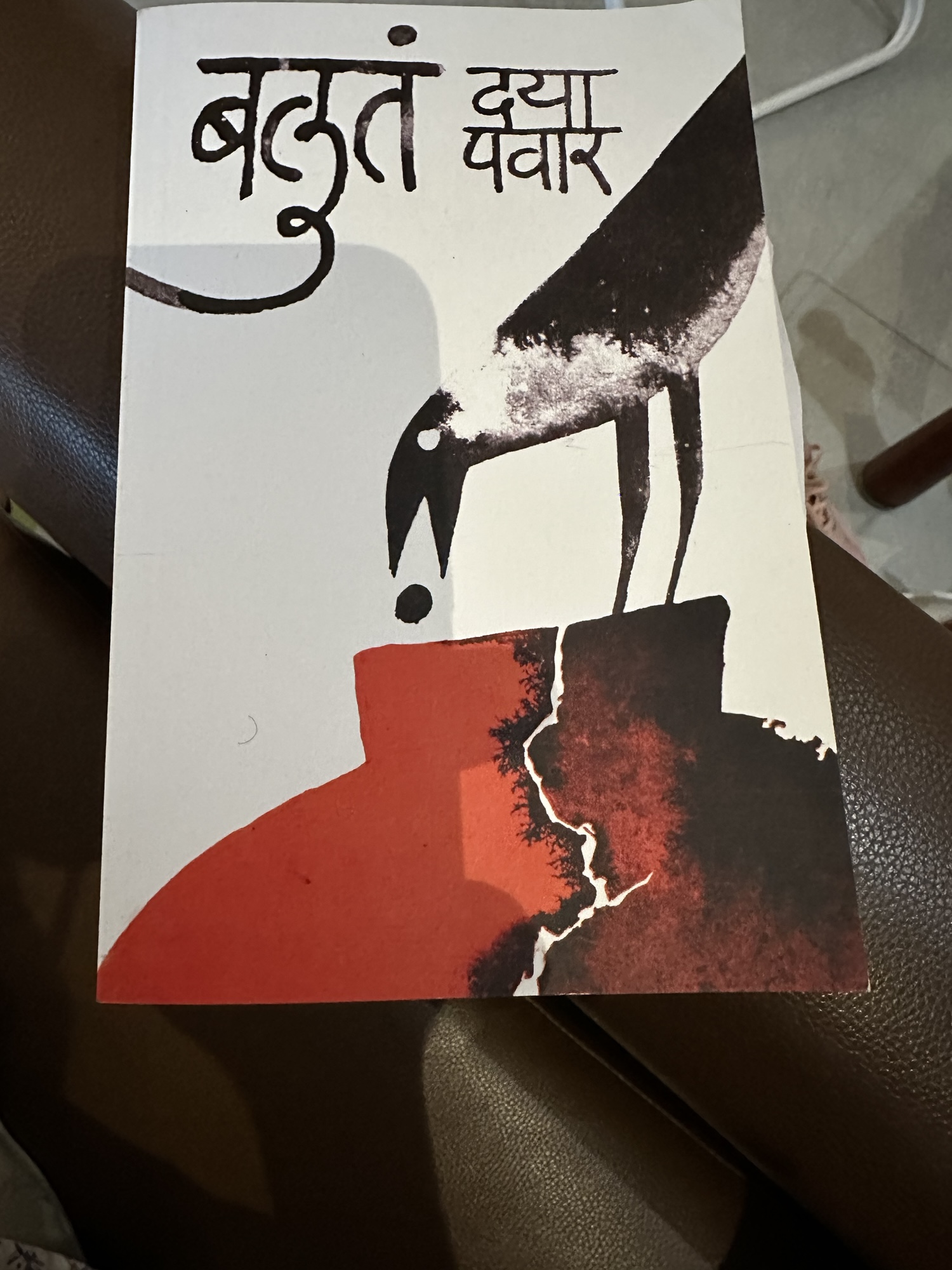
From Uncle Tom’s Cabin to Baluta : seeing Black struggles, missing Dalit voices – how literature shapes consciousness

September 15, 2025

While watching an old interview of Muhammad Ali which popped up on my phone screen it occurred to me that I have never sat across a table and had a real conversation with a black man or woman. I consider this one of the gaps in my experience despite my travels and my interest in conversations with people whose culture and lived experiences are different from mine. Yet through books and films, I grew familiar with black lives when I was quite young. Beginning with Uncle Tom’s Cabin. Over the years I read about the slave ships that crossed the Atlantic, the plantations where lives were broken, and also the fierce dignity that rose from oppression. I have read James Baldwin and Richard Wright, read and watched Roots, and admired actors like Sidney Poitier who brought depth and grace to the screen. And in my boyhood, Muhammad Ali loomed larger than life – an athlete, rebel, and poet rolled into one.

In the next moment, with a recently acquired copy of Marathi Dalit writer Daya Pawar’s book Baluta lying in front of me, it occurred to me that as a young person I had a more intimate sense of the struggles of black people in America than of Dalits in my own country. ‘ Dalits’, a word I learned much later, were identified in conversations by their earlier caste names and the kind of work they did. I learnt through education to refer to them as Harijans. Educated Indian minds could rest assured that equality before the law and positive discrimination by implementing education and job reservation quotas were the solution to historical exclusion. Because our constitution had ensured that. Instead of guilt about the past there was pride about our collective kindness towards the ‘Harijans’ in accordance with ‘ modern’ ideas of democracy and equality before the law.

The history text books we read were “balanced” and bland – lists of reformers and leaders, social evils “eradicated,” milestones achieved. There were references to Gandhi, Nehru, Patel, Subhash – names every child knew by heart. Ambedkar’s name was there too, but more as a framer of the Constitution than as a thinker, writer, or revolutionary whose words might unsettle. Untouchability was acknowledged as an undesirable social practice, one that our enlightened reformers had worked hard to ‘abolish’. In some discussions I have heard over the years – and I still hear- the ‘caste system’ of the past is explained as a brilliant division of labour which worked perfectly for the economy of the past but is no longer necessary. Hence the progressive ‘reforms’ – through legislation

Despite my natural sympathy for the poor as a boy and my anger at any instance of any poor ‘servant boy’ being scolded by any relative for some mistake or misdemeanour in a manner that seemed excessive or unfair, the lived reality of Dalit lives was not something that was apparent to me. Although there were ‘ servant boys’ from poor rural families working as domestic help in homes but they were not Dalits. I was barely aware of the existence of the individuals who cleared ‘ night soil’ from traditional toilets – without having to enter homes.

I heard no stories about Dalit lives although I heard all kinds of stories from all kinds of people. Which included stories from teenager servant boys about life in their villages. Any reference to any Dalit – by their original caste names – was incidental to any story. No Dalit was a protagonist in any story I heard as child. Not even as a minor character. Dalits were outside the pale of non-Dalit consciousness as it were. Or on the periphery. Silent – and almost invisible. Without the drama of the visible lives of slaves owned by people or serfs serving their feudal lords. Where there was scope for cruelty or compassion, conflict or sacrifice. And therefore stories. In contrast the Dalits were simply creatures who did the dirty work of scavengers for the community and were expected to keep a safe and silent distance from every asset and amenity of the community – wells, temples or schools and ‘public spaces’. According to the rules of social and personal hygiene – as ordained by tradition. Rules which did not apply to domestic animals who lived in close proximity – and therefore featured sometimes in stories I heard. Cows were worshipped. Dogs were pets. Cats were fed.

Discrimination and exploitation are not always visible or even deliberate. They can be structural. And made acceptable by a world view which suggests that every body’s status at birth is the result of the Karma of their previous life. And that the Varnashram system was the perfect framework for organising the economy and society in the past in the Indian sub-continent.

In my school and college years, I did not even know that Dalit literature existed as a genre. A few ‘art’ films of the 1970s and 1980s – Govind Nihalani’s Aakrosh and Ardh Satya, Shyam Benegal’s Ankur – touched on caste, but Bollywood cinema mostly dramatised the feudal exploitation of farmers by zamindars or the capitalist exploitation of workers. Dalits, if they appeared at all, were barely visible figures in the background.

It was only when I began my career as a civil servant in Maharashtra that the gaps in my understanding became too stark to ignore. They could be filled only through my own quest to understand the social fabric and the reality of Dalit lives – beyond the symbolism and rhetoric of politics . Reading Ambedkar properly for the first time was like discovering a new grammar of Indian history. Annihilation of Caste was searing. The writings of scholars like M. N. Srinivas or Rajni Kothari, valuable though they were in explaining the sociology and politics of caste, had not told me what it felt like to be Dalit.

That truth came through literature – English translations, to begin with. Omprakash Valmiki’s Joothan, with its painful memories of humiliation; Daya Pawar’s Baluta, the first Dalit autobiography that broke the silence of Marathi literature; Baburao Bagul’s stark and uncompromising stories in When I Hid My Caste; and the poetry of Namdeo Dhasal that burned with anger and dark music. These works opened windows I had not known existed. They were not sociological analyses but living testimonies – voices that spoke of indignity and exclusion, but also of resilience, creativity, and the fierce hunger for equality.

Looking back, I sometimes wonder: how did I, who had read Baldwin and Angelou, remain blind to Valmiki and Pawar until much later? Perhaps it is because of the silence we inherit, the selective amnesia of our textbooks and media, the comfortable ideals and sanitised narratives of progress. Literature, when it is true, does not let you look away. It forces you to imagine lives other than your own.

———

The path  to eternal patience : as revealed  in shopping aisles 

September 2, 2025

Seekers of wisdom, weary men, and accidental saints – welcome. Today, I unveil a spiritual practice, perfected through years of trial and despair while loitering outside trial rooms: following the significant other as she “just peeps into shops” – in Montreal, Moscow, Montenegro or Manipur.

You think patience comes from meditation? Ha! Patience is forged by standing in the “50% Off – Final Clearance” section for forty-five minutes while she  debates whether polka dots are still in fashion.


Lesson 1: Time is an illusion 

She says, “Just one store.” You believe her. That is your first mistake. Time bends in the gravitational field of a sale sign. Ten minutes for her is ten centuries for you. Welcome to eternity.

Lesson 2: participation without  presence 

You will be asked questions like, “Do you think this looks good on me?” Understand: this is not a question. This is a trap. Master the sacred phrase: “Yes, perfect” and deliver it with the conviction of an experienced thespian who is day dreaming about sitting in a cafe, sipping a Negroni.

Lesson 3: Emptiness 

As your day dreams wane – so does your ego. Soon you will no longer care about anything. You have transcended.

Lesson 4: Trial by bags 

At the end of the all the research,  she may finally purchase a thing or two . And when she does, she will hand it to you. Those shopping bags are not mere fabric and plastic. They are sacred weights – symbols of suffering, badges of endurance, proof of your spiritual progress. Carry them proudly, pilgrim.

Lesson 5: Nirvana in the aisles 

Around the seventh store, your brain will quietly shut down. You will stop thinking, stop caring, stop resisting. You will achieve pure thoughtlessness.

——

In praise of never asking questions

August 31, 2025

The thinking person’s guide to not thinking

Ladies and gentlemen, allow me to declare solemnly : I believe in stories. Not just any stories, but the right stories – the ones that agree with me.

You see, facts are slippery, treacherous little things. They change, they demand proof, they refuse to flatter. But stories are loyal! They conform beautifully to the religious truths of my ancestors, the racial certainties of my tribe, the historical legends of my nation, and of course, the political doctrines of my party.

Who really wants the discomfort of doubt? Doubt is corrosive. Doubt asks questions. Doubt suggests I might be wrong.

So when you ask me, “Why don’t you question these stories?” I say to you: why should I? They give me comfort, they give me community, they give me power. Doubt is over-rated. Belief is convenient.

Therefore, I stand before you, unashamed, unwavering, unburdened by the need of evidence – a true believer in the sacred art of never asking questions. And I invite you all to join me. Because if enough of us clap loudly enough, perhaps reality itself will finally fall in line.

As for those who don’t subscribe to my beliefs or to my views which are based on my beliefs I have stories about them too. And prescriptions for curing, curbing or crushing them. I used to whisper some of these prescriptions earlier. Nowadays I simply forward them on WhatsApp.

My experience with the ‘washed’ coal mafia

August 26, 2025

https://www.linkedin.com/posts/subratratho_standing-up-for-integrity-my-experience-activity-7366050010301370370-wwq6?utm_source=share&utm_medium=member_ios&rcm=ACoAAAHGcZkBMT77w-sOUs28hX1EJk7dEFI_O4s

Odrra: an authentic celebration of Odiya Cuisine

August 25, 2025

Odisha’s food traditions remain relatively underexplored outside the state. Yet, Odiya cuisine is remarkably diverse – drawing on the bounty of its rivers, coastline and fertile plains. It is characterised by a balance of flavours rather than an overreliance on spice. Mustard, coconut, and rice play starring roles; slow-cooked vegetables and lentils reveal surprising depth; seafood and mutton are prepared with a quiet confidence. Many of its finest dishes are still best discovered in Odiya homes rather than restaurants.

This is why Odrra, a recently opened restaurant tucked away in a quiet residential neighbourhood of Bhubaneswar, feels so special. It serves as both an introduction and a homecoming -presenting Odiya food exactly as it is meant to be, without gimmicks or unnecessary innovation. The kitchen makes no attempt to “modernise”; instead, it honours tradition and lets the ingredients and recipes speak for themselves.

The menu is compact but thoughtfully curated, offering a mix of familiar favourites and lesser-known gems. There is enough variety to showcase the state’s culinary breadth without overwhelming diners. Even as an Odiya I found myself rediscovering some dishes I had only tasted later in life. Odrra brings that same sense of quiet discovery to the table.

Among the highlights are the Kandhamal roast, redolent of the tribal heartland’s earthy spices; chitou pitha with mutton curry, a dish that feels both festive and comforting; and the khiri sarsatia, a rare dessert that lingers in memory long after the meal. Every plate reflects the use of regional ingredients and time-honoured techniques, a reminder of how vibrant and distinctive Odisha’s food truly is.

Bhubaneswar already boasts some fine Odiya restaurants, and I have enjoyed many of them. But Odrra offers more than excellent food; it creates an experience. The red oxide floors, minimalist interiors, and warm, story-rich ambience exude a sense of understated exclusivity. The owners welcome guests with genuine warmth, making it feel more like dining in a gracious home than a commercial establishment. And despite its fine-dining sensibility, Odrra remains refreshingly affordable – indulgence without guilt.

For anyone curious about Odisha’s food culture, Odrra is an ideal starting point; for Odiyas themselves, it is a delicious reminder of the treasures of their own kitchens. Some of the best culinary journeys happen not by chasing novelty, but by celebrating tradition – and Odrra does just that.

—-

A smile is everything

August 24, 2025

This morning, from our chalet window in Les Collons, the Swiss Alps glowed in that soft light only mountains seem to know. Time moves differently here – slow enough for you to notice how the sun brushes the slopes and how silence has its own music.

At the village store, a local woman helped me find a packet of butter. Every label was in French and German, and she spoke halting English with a lilting German accent. We fumbled over words, laughed, and pointed at shelves until success . Her kindness lingered longer than the scent of the sourdough bread I carried back.

Yesterday, on the flight here, I sat beside a Frenchman who grew up in Bordeaux and now lives in Zurich. He was returning from Jakarta, reading an English book on Indonesia by an anthropologist. We spoke just enough to share his fascination with cultures far from home and my own love for wandering without an agenda. Then silence- comfortable, unforced- settled between us, like an old friend who asks for nothing. And then there was Maria with her radiant smile who served us with genuine joy and told me she had liked the food in Indore, which is the home town of one of her friends in Abu Dhabi. She also recommended the Azures in Portugal ( her home country) for a relaxed holiday in beautiful surroundings – and amazing food. She also told me watching Netflix how she gets to hone her English – which she speaks very well already. I did notice her pronunciation of island – in which ‘s’ was not silent. Cute !

It strikes me how travel is not only about where you go, but the quiet worlds you step into when you linger in small places and chance encounters. Villages where no one rushes, where conversations are soft and smiles are shy; flights where a co-passenger’s presence or the chirpiness of an air hostess, makes you feel more connected to humanity.

Sometimes it’s a conversation, sometimes just a few words, sometimes only a glance. But in these brief encounters there’s a quiet magic. Proof that connection needs no grand language or elaborate introduction.

Up here, in the hush of the Alps, I realise again: a smile is everything.