The Magic of Travel Mornings
July 23, 2025Read the leaves if you can’t read the lips 😊
July 22, 2025
–
When Trust Is Shaken
July 16, 2025“There must have been moments even that afternoon when Daisy tumbled short of his dreams — not through her own fault, but because of the colossal vitality of his illusion.”
— F. Scott Fitzgerald, The Great Gatsby
It may not always be about romantic love.
Sometimes it’s simply affection – slow, steady, real.
Shared laughter.
Late-night conversations.
A quiet ease in each other’s presence.
And with affection, comes trust –
Not declared, but gently growing.
You open up.
You care.
And then one day, something shifts.
A small lie.
An omission.
A silence that hides.
It’s not betrayal. Not quite heartbreak.
But it stings.
Because they mattered.
Because you let them in.
Because they had your trust.
Sometimes, an open argument over a hard truth
hurts less than a hidden one.
Because pain can be processed –
but silence and lies… they linger.
You try to carry on as before,
But the warmth has dimmed.
You pull back.
You still care – but now, from a polite distance.
So you give space – to them, and to yourself.
And eventually, you choose.
Maybe to forgive and move forward – but cautiously.
To remain open – but more discerning and distant .
—
All in All : It’s the Music in the Soul
July 12, 2025Chasing happiness through exotic destinations or exclusive single malts may or may not be elusive. But for me, all it takes is a few bars of an old song from childhood or youth – and I’m smiling like a teenager who’s just been told his exam has been postponed.
I’ve seen technology evolve from valve radios to voice assistants who think they know my music taste. But no playlist algorithm has ever quite matched the emotional precision of the radio announcer on Vividh Bharati. One minute I’d be half-asleep on a Sunday afternoon, and the next – Lata, Kishore, Mukesh, Rafi, Hemant or Talat would start singing, and the rhythm of my breath would change. On Wednesday evenings ( or were they Tuesdays ?) it was Binaca Geet Mala on Radio Ceylon. Homework could wait.
Lush with violins, and the kind of romantic lyrics that may have felt too dramatic if they were not so achingly sincere. I may have been too young to fully grasp “Woh shaam kuch ajeeb thi”, but somehow, I felt it.
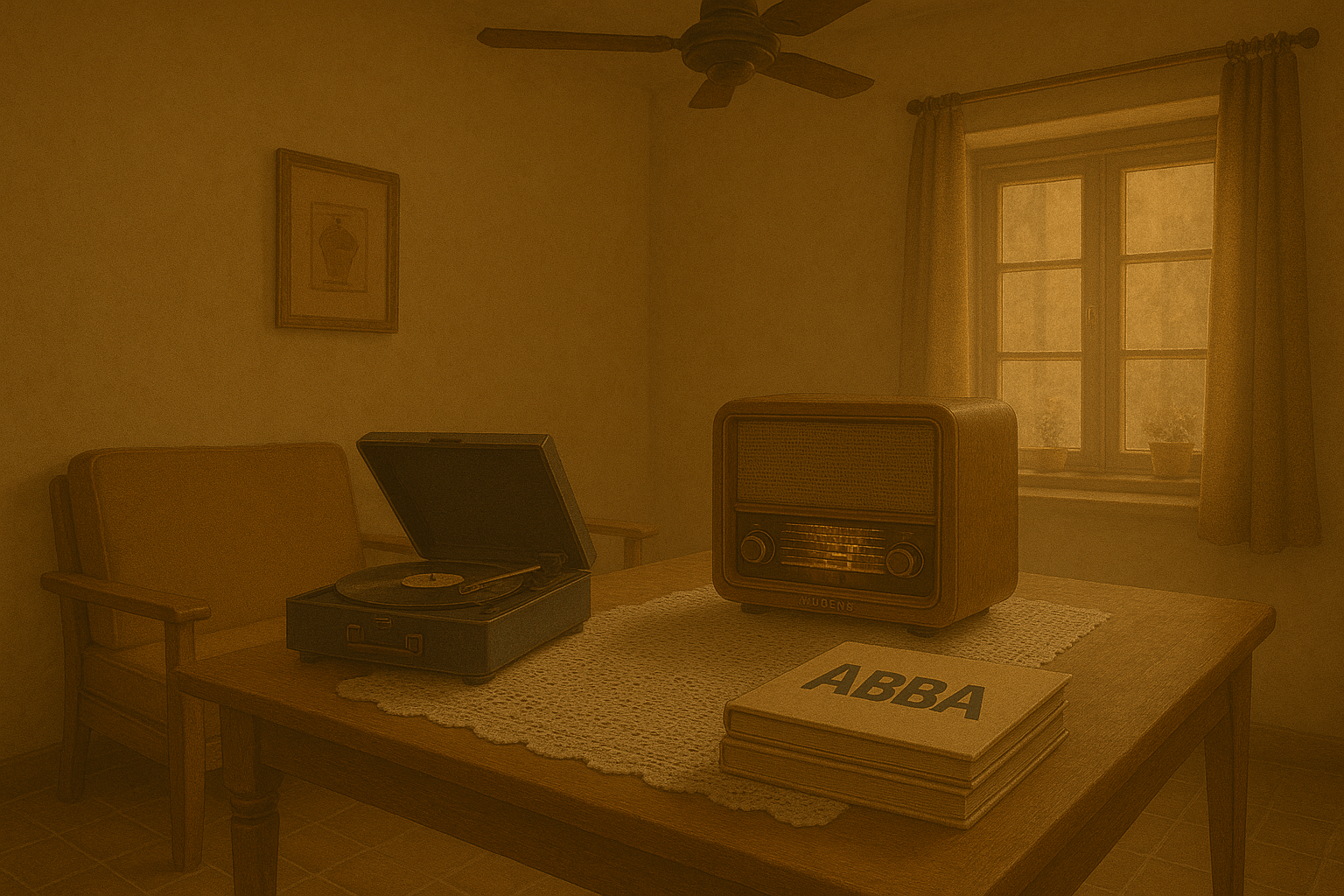
And then there was the phenomenon of The Ventures, spinning on my eldest uncle’s HMV vinyl player in my grand parents’ home in Cuttack – like rock ’n roll sports from faraway lands. Their twangy guitar transported me to an exotic world where life was cool and breezy – even if I was sweating in a banyan, hoping the ceiling fan would spin faster.
The real revolution came when we got our own vinyl record player. A used one, gifted to my father by a boyhood friend of his, who himself had received it as a gift from a relative who lived abroad. A proper machine with all parts intact – including a plastic dust cover. I was around sixteen, my siblings much younger. We had moved from Cuttack to a new town called Rourkela. I was making by new friends. Experiencing new feelings.
It was my mother and I who took the greatest delight in the unexpected bonanza . But purchasing vinyl records did not fit into her household budget. So we were only ever able to buy about half a dozen vinyls over time. But what magic they held !
Into the new machine, which I operated as if it was spacecraft, went the vinyl spells of ABBA and Boney M, alongside Mukesh and Lata Live at the Albert Hall. Of course, there was also the trusty little cassette player with a few prized tapes – including Jagjit Singh and Chitra Singh, whose ghazals floated over my bed like silken sighs.
Dancing Queen, Neena, Rivers of Babylon, Chiquitita, Ma Baker, Honey Honey – they seeped into my soul. My mother couldn’t relate to these foreign beats, but she indulged me in this regard, despite a somewhat strict household regimen in most other matters.
I even managed to get hold of the Saturday Night Fever album and tried to imitate Travolta’s moves – when no one was watching.
Before the responsibilities of a job and family took over my life completely I had the time to fall in love with others. Like the Beatles, Bob Dylan, Carpenters, Cliff Richards, Neil Diamond, Billy Joel, the Sinatras, Mehdi Hassan, Ghulam Ali, Subbulakshmi, Yesudas, Bhimsen Joshi, Kumar Gandharva, Kishori Amonkar , Farida Khanum, Eagles, Modern Talking, Simon & Garfunkel, Santana, Bob Marley, George Michael and many others.. And Jazz. And Vivaldi. And Pink Floyd of course !! Most have a back story ) including SPICMACAY and other evenings ) – some of which have faded from memory…
I was digressing…
My affair with the vinyl player lasted for about two years until we moved back from Rourkela to Cuttack – before I could dive into the musical world of Led Zeppelin or Uriah Heep in the company of a friends who was devoted to Radio Australia…
In the course of this meandering, I almost forgot to mention the legendary Akshaya Mohanty ( or Khoka Bhai) – the soul of popular Odia music for an entire generation. His mellifluous voice, laced with warmth and – and sometimes a gentle mischief, captured the imagination of young Odias everywhere. Whether it was love, longing, or laughter, he had a song for every mood – each one a story in itself. His music drifted through every bazaar and by-lane of Odisha, becoming part of the everyday soundtrack of life.
And then there is that singular, unforgettable gem – Hrudaya Re Ei Sunyata Ku – sung by Shekhar Ghosh. A one-off wonder, yes, but what a wonder it is. Every Odia with even a passing familiarity with sur and taal knows it by heart, not just as a song, but as a deep, haunting echo of solitude and yearning.
But let me not digress again…
Today, music streams, shuffles, syncs. But the songs that stir my spirits the most are the ones that remind me who I was. And every time I hear one of them – at a café, a wedding Sangeet, or by sheer YouTube accident – something in me lights up.
That’s the magic of music. It doesn’t just bring back memories – it brings back me.
I don’t know what was the ultimate fate of the old RCA vinyl player or the few vinyls we had ( or even that large Murphy radio ) but I have acquired a new turn table recently.
And now I hope to be able to listen and connect again.
With heaven.
Or with the subterranean..
_______
https://youtu.be/mKc3gy-SHmE?feature=shared

—

Mary Jane in Manhattan
July 10, 2025I was walking in Manhattan in May,
Past yellow cabs honking near Broadway.
The air felt busy, the crowds were thick,
Then came a smell- strong, sweet, and quick.
It wasn’t a pretzel or pizza slice,
It smelled like someone was rolling spice.
Not cinnamon rolls or roasted seed-
Nope. Just good old-fashioned weed.
By Times Square lights and Central Park trees,
It floated along with the city breeze.
Outside a deli, near a bagel shop,
Someone lit up with a quiet pop.
No one cared, they just strolled on by,
Even the pigeons looked a bit high.
It’s legal now, so folks don’t hide,
They puff their clouds with urban pride.
So if you’re in Manhattan and sniff something strong,
Don’t worry- it’s weed. You won’t be wrong.
Just smile and breathe (or hold your nose tight),
It’s part of the city, both day and night. 🌆🌿
–

—
Scary but real : thoughts after watching A Beautiful Boy and Adolescence
July 9, 2025Watching A Beautiful Boy is like witnessing a parent do everything possible – read, reason, plead, love – and still watch their child slip away into addiction. Not because they didn’t care, but because sometimes love, when not paired with limits, can become helpless.
The Netflix series Adolescence, featuring Jamie Miller, offers another window into this fragile stage of life. Jamie is not a bad kid. He’s thoughtful, confused, emotional – and like many teenagers, quietly overwhelmed. There’s no one moment of collapse. Just a slow drift, enabled by absent boundaries and unclear guidance.
Both stories are unsettling because they’re so familiar. These aren’t cautionary tales from troubled homes. These are stories that could belong to any family. And they highlight a hard truth: adolescence isn’t just a phase. It’s a vulnerable, high-risk time – and it needs adults who are not only loving, but also strong.
Because here’s the reality: teenagers need rules. They may argue against them, but they need them. Boundaries give them a sense of safety and structure. Adults often hesitate – fearing confrontation, or wanting to be seen as supportive. But when understanding turns into over -indulgence, or when guilt replaces discipline, the results can be damaging.
Respect for money, time, and discipline doesn’t come naturally. It must be taught. And it starts at home – with consistent boundaries, with the courage to say no, and with conversations about effort, responsibility, and consequences.
Yes, adolescents need to be heard. But they also need to be challenged – gently but firmly. Giving in to every emotional outburst, rescuing them from every discomfort, or handing out money and other resources without context teaches the wrong lessons. That actions don’t have consequences. That limits don’t exist.
What A Beautiful Boy and Adolescence make painfully clear is that presence alone is not enough. Adults must also be anchors – calm, firm, and sometimes unpopular. Young people watch more than they listen. They learn from what we tolerate. And in a world that pulls them in every direction, they look to adults for signals – of what’s acceptable, what’s valued, and what’s not.
So yes, be patient. Be calm. Be kind. Listen. Respect. Reason. Forgive. Encourage frankness. But also be clear. Set rules. Teach restraint. Insist on respect – for self, for others, for money, for effort.
Because adolescence isn’t imaginary. It’s messy, confusing, and very real.
But it’s also an opportunity – for growth, for resilience, and for adults to lead – not just with open hearts and patience but also with strong minds steady hands.
Why I respect cats – before and after coffee
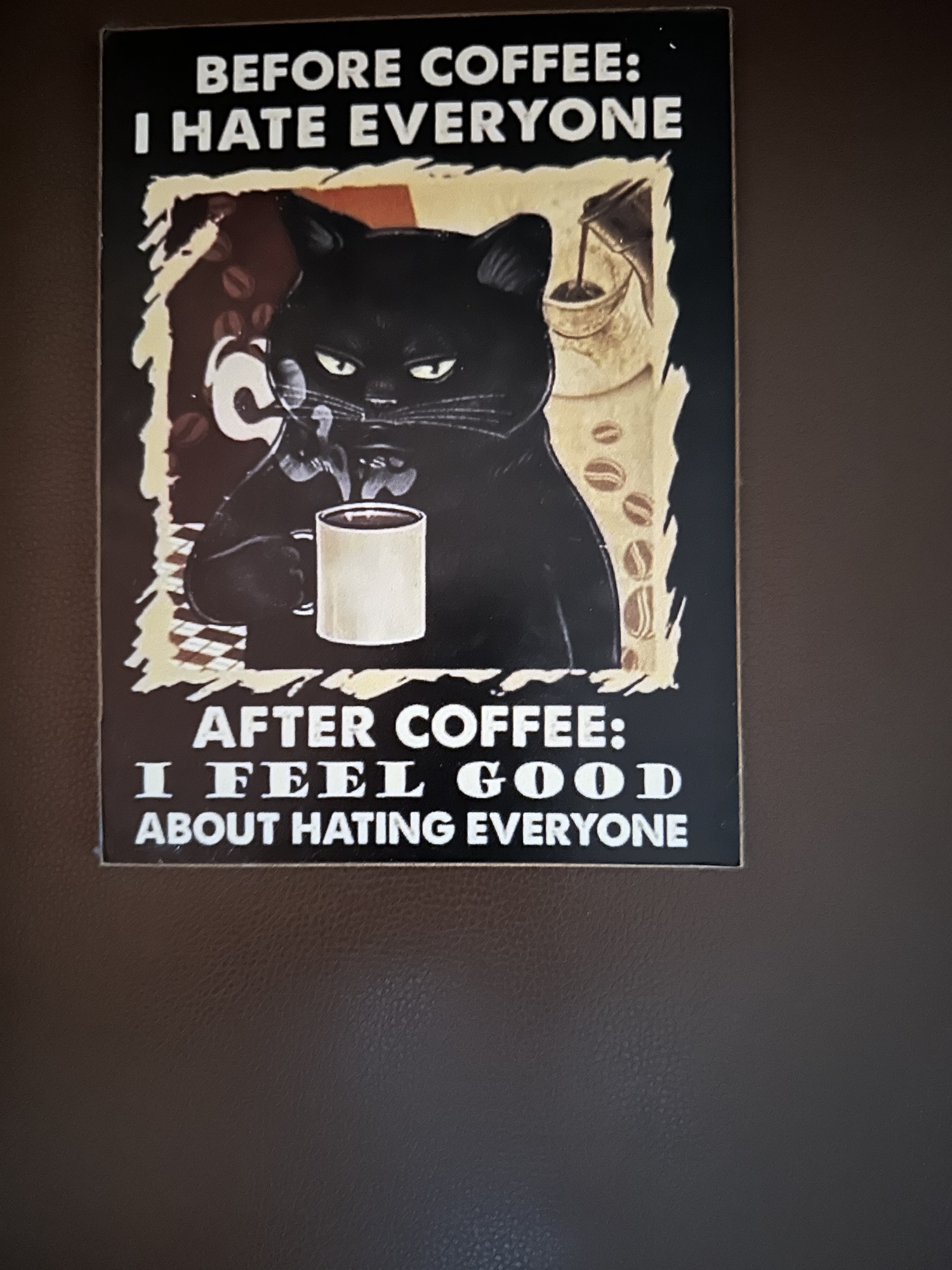
July 8, 2025While wandering around the cobbled mediaeval alleys of one European old town full of insouciant cats, I saw a cat poster in a little shop that said:
“Before Coffee : I hate everyone. After Coffee : I feel good about hating everyone.”
I was overcome by an intense desire to possess the poster. I acted on my impulse and I have no regrets about this one. The poster still makes me smile. ( Fortunately – or unfortunately – I do not act on my occasional impulse to possess a dog or a cat – or a human. )
Now the thing about cats is that they seem to have opinions – but no interest in sharing them.
Unlike some humans.
I don’t really hate people. I enjoy the company of people who have stories – the kind where they’re not always the protagonist.
People who light up about an idea, a book, a film, a song, a painting , a performance, a recipe, a moment, or a stranger ( or dog ) they once met. People who listen to the stories ( not opinions) of other people without looking at their phone screens.
Then there are the others.
Every pause is a cue for another opinion. Or a story – about the impact of their own powers, post or presence of mind. Or their rage. Or outrage. Or victim hood .
I once endured dinner beside someone who had three firm opinions and two stories of personal glory .
I had acid reflux afterwards.
Cats don’t push their views.
They’ll watch you taking pictures of your wife instead of them, quietly judge you, and walk away.
If cats were on WhatsApp groups, they’d be silent. Or leave silently.
No dramatic exit. No broadcast messages. Just gone.
People with opinions? They’re always around.
Cats, I respect.
Dogs, I love.
People ?
Depends on the conversation – or the coffee.
⸻
CoffeeThoughts
CatsOverPeople
OpinionOverload
DogLoverCatRespecter
BeforeCoffeeAfterCoffee
StorytellersNotSoapboxes
SilentJudgementIsAnArt
LifeWithAFilter
How Zorba the Greek Derailed My Spiritual Ambitions
July 5, 2025Once upon a time I was an indefatigable reader of books by spiritual masters and about spiritual masters.
From the austere wisdom of the Upanishads to the whispering clarity of Rumi; from the razor-sharp aphorisms of Zen monks to the ever-smiling Dalai Lama – I devoured them all. Tibetan lamas, Sufi mystics, Christian contemplatives, and, yes, even the occasional Hawaiian shaman or California – based crystal whisperer. If someone had even briefly glimpsed enlightenment, I wanted their reading list.
Like many ‘seekers’ (with mild existential anxiety) I was trying to decode the big questions:
What is the purpose of life?
Why are we here?
What happens after we die?
And also – should I eat carbs after 8 pm if I want to attain moksha?
I diligently underlined passages, lit incense, listened to chants and tried very hard not to judge people. I nodded gravely when someone used the word “non-dual.” I even attempted silence. (On day two, someone asked me what was wrong with my voice.). I also went through a ten days Vipssana course. It was uplifting and learnt to mediate.
But then… I met Zorba.
Or rather, I read Zorba the Greek. And something shifted.
Here was a man who didn’t quote scriptures, didn’t meditate at dawn, and certainly didn’t follow any “12 steps to transcendence.” Zorba danced. He loved. He failed. He laughed like the gods were listening – and couldn’t care less. He devoured life with both hands, spilt wine, and the occasional broken plate.
And suddenly, all those questions I had held so carefully began to wobble a little.
It wasn’t that Zorba answered the great spiritual questions. It’s that he made them seem slightly… beside the point.
Because what if the meaning of life is simply to live it? Fully. Messily. Gratefully. What if we’re not here to transcend the human experience, but to inhabit it?
Zorba didn’t seek detachment -he sought engagement. Not escape, but immersion. He was a walking contradiction: earthy and wise, wild and kind, reckless and clear-eyed.
After Zorba, I began reading the mystics a little differently. I still love their insights – but now I suspect many of them would’ve quite enjoyed a night out with Zorba too. Even the Buddha might’ve smiled at one of his jokes (before returning to his cushion, of course).
So here I am now – older, possibly wiser, and only occasionally smug about inner peace. I still listen to chants sometimes but soon shift to Jazz. I still flip through spiritual books out of habit. I meditate sometimes. But I also dance , badly, to Bollywood music. And when someone offers me a glass of wine, I don’t check if it’s organic or karma-free. I just raise a quiet toast to Zorba and then ask if there is any Mezcal in the house. If not Ouzo.
Because maybe the sacred isn’t always in silence.
Sometimes it’s in the laughter that bursts out when you stop trying so hard to be profound.
💬 “Life is trouble. Only death is not. To live… is to undo your belt and look for trouble.”
– Zorba the Greek
—
Mysticism, Modernity, and the Mind’s Quiet Longing
July 5, 2025The modern mind, even at its most intelligent and self-aware, is rarely still. Beneath the surface of our daily routines runs a restless current of desires, anxieties, and calculations – shaped by familiar human preoccupations: safety, social approval, material success, reputation, influence, and control. Even our moments of pleasure are often tainted by the underlying question – how can I hold on to this? How do I get more?
It is through the arts – literature, music, architecture, and visual expression – that we sometimes rise above this conditioned state. When these mediums transcend mere entertainment or emotional stimulation, they offer a portal to something subtler, deeper. In such moments, the mind stirs with a distant memory of stillness – of a consciousness less entangled in craving and comparison. At its highest, art becomes a quiet echo of the mystical.
Mysticism, however, is not mere aesthetic transcendence. It is a fundamental reorientation of consciousness. The mystic does not simply think differently; they are different. Their perception flows from a different center of gravity – one that is not defined by the self, but liberated from it. Yet this state is difficult, if not impossible, to describe using the language of ordinary experience. Mystics speak in metaphors, paradoxes, and silences-pointing not to doctrines, but to direct knowing.
And herein lies a perennial danger: the symbols and sayings of mystics, when stripped of their experiential roots, often become tools of illusion. People may project onto mysticism their hopes for divine intervention, miraculous outcomes, or metaphysical shortcuts to success. The mystic’s invitation to surrender becomes a promise of reward; their insight becomes doctrine; their metaphors become magic.
It is true that some mystics-later canonized as saints or prophets – have been able to communicate a message of love, compassion, and fearlessness to those around them. A few among their followers even managed to live this truth. But over generations, what began as lived insight often ossifies into belief systems, rituals, and power structures. The mystical impulse is rarely scalable, and traditions built around it often become mere shadows of the original flame.
In today’s world – shaped by accelerating technology, algorithmic distraction, economic precarity, and ideological fragmentation – people find themselves more anxious, more divided, and more desperate for certainty. As institutions falter and worldviews clash, many retreat into inherited identities: religious, cultural, tribal. Others seek to evangelise or defend what they perceive as under siege. Both are, in different ways, responses to fear. And fear is the antithesis of the mystical.
The tragedy of modernity is not that we have lost access to mystical states, but that we have drowned out the conditions that allow them to emerge: stillness, silence, inwardness, self-questioning. Our age encourages noise over nuance, spectacle over substance, assertion over inquiry. And yet, beneath the surface, the longing persists – a longing not for more, but for meaning. Not for certainty, but for truth. Not for belonging, but for being.
Perhaps the role of art, philosophy, and contemplative inquiry today is not to offer answers, but to keep this longing alive. Not to lead people toward yet another ideology, but to help them hear what remains unsaid – the quiet call of the real.
#Philosophy #Mysticism #ModernConsciousness #ContemplativeLife #ArtAndSpirituality #InnerJourney #SilenceAndStillness #SpiritualPhilosophy #ReligionAndModernity #MindfulnessBeyondTrends #MysticsAndMeaning #TheSearchForTruth
—
 An ordinary life